Semrush vs SE Ranking: Which SEO Tool Delivers Better Value in 2025?
A comprehensive comparison of two leading SEO platforms to help you choose the right tool for your business
Last updated: 10/01/2025
Ask any SEO professional which tools they can’t live without, and you’ll likely hear both Semrush and SE Ranking mentioned. Both platforms have built solid reputations in the digital marketing world, but they serve slightly different audiences and price points.
I’ve spent considerable time working with both platforms over the years—SE Ranking as my daily driver for client work, and Semrush for larger enterprise projects. Whilst both tools will get the job done, they each have distinct strengths that make them better suited for different scenarios.
Let’s break down exactly what each platform offers and help you determine which one deserves a spot in your marketing stack.
Quick Comparison Overview
| Feature | SE Ranking | Semrush |
|---|---|---|
| Starting Price | £52/month | £117/month |
| Best For | Budget-conscious agencies & freelancers | Enterprise teams & comprehensive SEO |
| Database Size | 4.9 billion keywords | 26.6 billion keywords |
| Free Plan | No | Yes |
| Key Strength | Affordable pricing & solid fundamentals | Massive data depth & advanced features |
| Historical Data | From 2020 | From 2012 |
| Learning Curve | Moderate – straightforward interface | Steeper – feature-rich platform |
Understanding Each Platform
SE Ranking: The Cost-Effective Workhorse
SE Ranking has positioned itself as the sensible choice for digital marketers who need professional-grade SEO tools without the enterprise price tag. It’s particularly popular amongst UK agencies and freelancers who manage multiple clients.
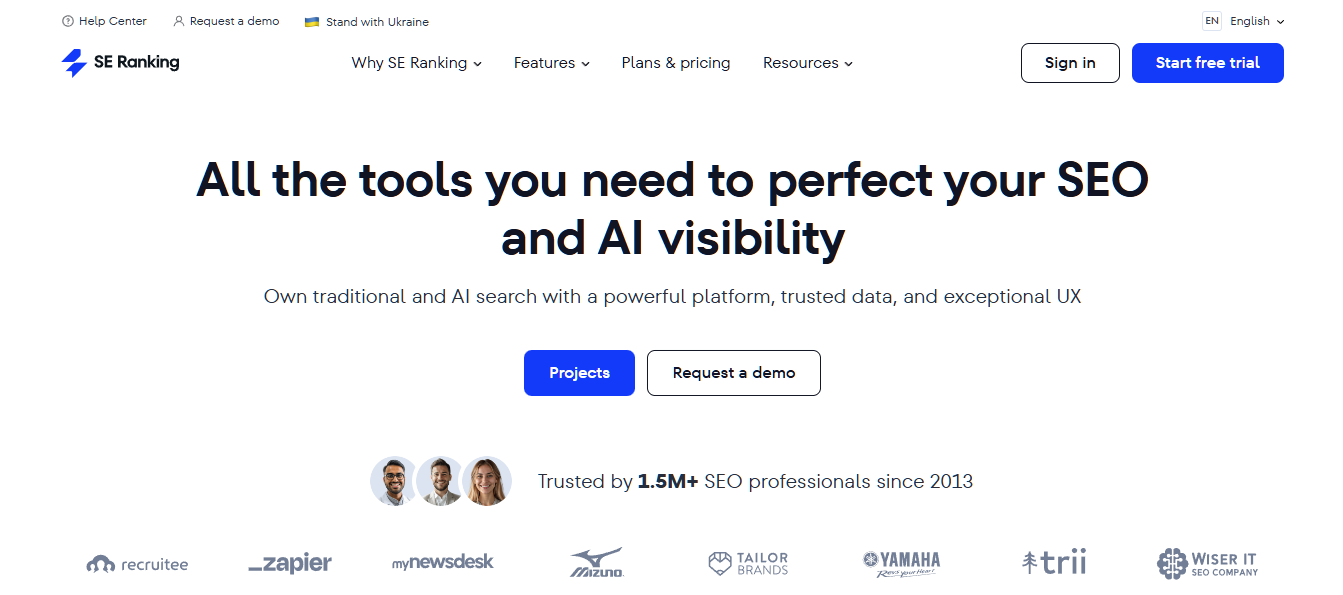
SE Ranking’s clean, straightforward dashboard interface
Core Capabilities
- Comprehensive keyword research database
- Automated rank tracking across search engines
- Competitor analysis and traffic insights
- Backlink monitoring and gap analysis
- Technical site audit functionality
- Content marketing tools (add-on)
- White-label reporting for agencies
- Social media management integration
- Local SEO toolkit (add-on)
What stands out about SE Ranking is its clean, uncluttered interface. You’re not overwhelmed with dozens of tools fighting for your attention—everything feels purposeful and well-organised. The platform handles the fundamentals exceptionally well, making it ideal if you need reliable SEO data without unnecessary complexity.
Semrush: The Enterprise Powerhouse
Semrush is the heavyweight champion of SEO tools. With one of the largest keyword databases in the industry and an extensive suite of advanced features, it’s designed for serious digital marketers who need comprehensive insights.
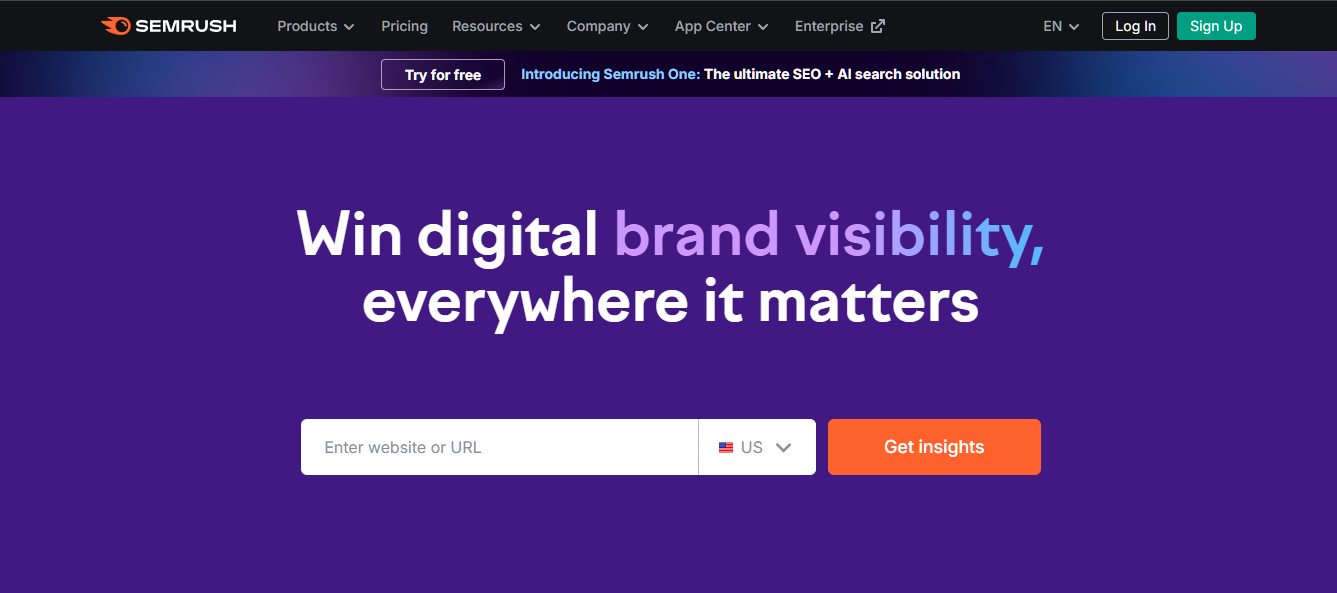
Semrush’s comprehensive feature-rich dashboard
Core Capabilities
- Massive 26.6 billion keyword database
- Advanced competitor intelligence tools
- Five distinct keyword research tools
- Link building prospect finder
- Comprehensive technical SEO audits
- Log file analysis for crawl insights
- Content marketing platform (included in higher tiers)
- Social media management suite
- Trend forecasting and daily trends
- ChatGPT position tracking
- Exploding Topics integration
- Agency-level reporting tools
Semrush doesn’t just give you data—it provides context, historical trends, and predictive insights. The platform excels at helping you understand not just where things stand today, but where they’re headed. This makes it particularly valuable for strategic planning and long-term SEO campaigns.
Pricing: The Elephant in the Room
SE Ranking Pricing
SE Ranking’s pricing is refreshingly straightforward and significantly more affordable:
- Essential: £52/month (annual billing)
- Pro: £95.20/month (annual billing)
- Business: £207.20/month (annual billing)
Add-ons:
- Content Marketing: £23.20-£79.20/month
- Local Marketing: £18.40-£920/month
- Social Media: £5.20-£26/month
- Additional Users: £16-£48 each
The entry price makes SE Ranking accessible to small agencies and freelancers who need professional tools without breaking the bank.
Semrush Pricing
Semrush commands premium pricing but offers substantial features at each tier:
- Pro: £117.33/month (annual billing)
- Guru: £208.33/month (annual billing)
- Business: £416.66/month (annual billing)
Add-ons:
- Content Marketing: Included in Guru & Business
- Semrush Local: £50-£60 per location
- Social Media: £19.99-£29.99/month
- Traffic & Market: £289 per user
- Additional Users: £45-£100 each
The higher price reflects Semrush’s extensive feature set and massive database. There’s also a free plan available for testing basic functionality.
Ready to Choose Your SEO Platform?
Both tools offer free trials so you can test before committing. See which platform feels right for your workflow.
Feature-by-Feature Breakdown
Keyword Research: Depth vs Practicality
This is where the philosophical difference between the two platforms becomes most apparent.
SE Ranking provides two solid keyword research tools: a traditional keyword research interface showing search volume, competition, and CPC data, plus a keyword grouping tool that clusters related terms. The 4.9 billion keyword database covers most queries you’ll need for UK and international markets.
Semrush takes keyword research to another level entirely with five specialised tools:
- Keyword Overview: Shows customisable difficulty scores and ranking projections for specific domains
- Keyword Magic Tool: Generates suggestions filtered by SERP features, query type, and intent
- Position Tracking: Monitors rankings across traditional search engines and even ChatGPT queries
- Keyword Strategy Builder: Creates complete content clusters in minutes—genuinely revolutionary for content planning
- Organic Traffic Insights: Connects to Google Analytics and Search Console for deeper traffic analysis
The Keyword Strategy Builder alone justifies Semrush for content-heavy websites. Being able to generate comprehensive topic clusters in 15 minutes versus hours of manual research is a game-changer for content teams.
Keyword Research Winner: Semrush
Whilst SE Ranking handles keyword research perfectly well for standard SEO work, Semrush’s advanced clustering and strategy tools provide capabilities you simply can’t find elsewhere.
Competitor Analysis: Historical Depth Matters
Both platforms excel at competitor research, offering similar core functionality: traffic estimates, keyword analysis, backlink profiles, and SERP positioning.
The key differentiator? Historical data depth.
SE Ranking’s domain history extends back to 2020—useful for understanding recent trends and changes. Semrush, however, maintains data going back to 2012 in many cases, allowing you to see how competitors evolved over more than a decade.
For established industries with long-term players, this historical perspective reveals patterns that shorter timeframes miss. You can see how competitors weathered algorithm updates, seasonal fluctuations, and market shifts over the years.
Backlink Analysis: Monitoring vs Prospecting
SE Ranking delivers solid backlink monitoring. You can audit your link profile, identify toxic links, and perform gap analysis against competitors. For maintaining backlink health, it’s entirely sufficient.
Semrush includes everything SE Ranking offers, plus a Link Building Tool that identifies prospecting opportunities complete with contact information. This feature alone can save hours of manual research when launching outreach campaigns.
If you’re primarily monitoring existing backlinks, SE Ranking works brilliantly. If you’re actively building new links, Semrush’s prospecting database becomes invaluable.
Technical SEO & Site Audits
Both platforms perform comprehensive technical audits with similar core functionality—they’ll identify broken links, crawl errors, mobile issues, page speed problems, and more.
SE Ranking’s strength: The SERP Analyser tool visualises ranking correlations for top-performing pages, helping you spot patterns when they exist. The interface is clean and uncluttered, making it easy to prioritise issues.
Semrush’s advantage: Log File Analyser shows exactly how search engine crawlers interact with your site. You can see precisely where Googlebot spends its crawl budget and how frequently it visits specific pages. This becomes increasingly critical as AI search evolves.
Both platforms also offer AI-specific SEO toolkits for optimising content for AI search engines—an increasingly important consideration.
Content Marketing Tools
SE Ranking’s content tool functions primarily as a briefing system. It’s excellent if you’re creating briefs to hand off to writers—you can specify target keywords, semantic terms, and optimization requirements. It requires more manual setup but gives you granular control.
Semrush’s SEO Writing Assistant provides real-time feedback as you write. Input your target keywords and it instantly generates semantic terms, scores your content, and suggests improvements. It’s designed for faster, more fluid content creation.
Notably, Semrush includes content tools in Guru and Business plans at no extra cost, whilst SE Ranking charges separately for this functionality.
Test Drive Both Platforms
The best way to know which platform suits your workflow is to try them yourself. Both offer trials or free plans.
The Honest Pros and Cons
SE Ranking
✓ What Works Brilliantly
- Significantly more affordable entry point
- Clean, intuitive interface that’s easy to navigate
- Covers all essential SEO fundamentals well
- Excellent for budget-conscious agencies
- Responsive, helpful customer support
- White-label reporting for client work
- SERP Analyser for pattern identification
- No overwhelming feature bloat
✗ Room for Improvement
- Smaller keyword database (4.9B vs 26.6B)
- Historical data only from 2020
- Content tools require add-on purchase
- Fewer advanced research capabilities
- Limited trend forecasting features
- Less comprehensive for enterprise needs
Semrush
✓ What Works Brilliantly
- Massive 26.6 billion keyword database
- Historical data extending back to 2012
- Five specialised keyword research tools
- Keyword Strategy Builder for content clustering
- Link Building Tool with prospect database
- Log File Analyser for crawl insights
- Content tools included in higher tiers
- Trend forecasting capabilities
- ChatGPT position tracking
- Free plan available for testing
- Exploding Topics integration
✗ Room for Improvement
- Significantly higher pricing (£117+ vs £52+)
- Steeper learning curve for beginners
- Can feel overwhelming with features
- Additional costs add up quickly
- May be overkill for small businesses
- Some features require training to use effectively
Who Should Choose Which Platform?
Choose SE Ranking If You:
- Run a small agency or work as a freelancer
- Need solid SEO fundamentals without extras
- Have a limited marketing budget (under £100/month)
- Prefer a straightforward, uncluttered interface
- Manage 5-10 client projects simultaneously
- Don’t need extensive historical data
- Want reliable tools without feature overwhelm
- Create content briefs for writers
- Value responsive customer support
Choose Semrush If You:
- Work in-house for a larger organisation
- Create substantial amounts of SEO content
- Need deep competitive intelligence
- Can invest £117+ monthly in tools
- Want comprehensive trend forecasting
- Run active link building campaigns
- Need ChatGPT ranking insights
- Value extensive historical data (2012+)
- Want content tools included (Guru/Business)
- Need advanced technical SEO features
- Manage enterprise-level campaigns
Additional Considerations
Ease of Use & Learning Curve
SE Ranking wins on simplicity. The interface is clean, the learning curve is gentle, and you can become productive quickly. Semrush requires more time to master—there’s simply more to learn given its extensive feature set. However, Semrush does provide helpful tooltips and onboarding guidance for new users.
Reporting Capabilities
Both platforms offer robust reporting features for internal tracking and client presentations. SE Ranking charges £20 monthly for white-label reports through their Agency Pack. Semrush’s My Reports Suite costs £10-£20 per report depending on your plan.
Social Media Management
SE Ranking connects to Facebook and X (Twitter), with pricing from £5.20-£26 monthly. Semrush offers broader integration (Facebook, Twitter, Instagram, Pinterest, LinkedIn, and Google Business Profile) at £19.99-£29.99 monthly.
API Access
Semrush provides more comprehensive API capabilities, particularly in Business tier plans with higher request limits and more endpoints. SE Ranking’s API focuses primarily on rank tracking and basic data retrieval.
Local SEO Tools
Both platforms offer local SEO capabilities as add-ons, with similar functionality for local rank tracking, business listing management, and review monitoring. Semrush has the added flexibility of offering local SEO as a standalone service if you don’t need their full platform.
The Final Verdict
The “better” platform depends entirely on your specific situation, budget, and requirements. Both are excellent tools that will serve you well—they just target different segments of the market.
Our Recommendation
Choose SE Ranking if: You’re a freelancer or small agency needing reliable, professional SEO tools without enterprise pricing. At £52/month, you get everything required to deliver excellent results for clients without unnecessary complexity.
Choose Semrush if: You’re managing larger campaigns, creating significant amounts of content, or need comprehensive competitive intelligence. The higher price tag buys you depth of data and advanced capabilities you won’t find elsewhere.
For many marketers, the sweet spot might even be starting with SE Ranking whilst learning SEO, then graduating to Semrush as your needs grow and budget allows. Both platforms can work together—using SE Ranking for client work whilst maintaining a Semrush subscription for deeper research isn’t uncommon in agencies.
Still undecided? Both platforms offer trials or free plans. Spend a week with each and see which one feels more natural for your workflow. The right tool is the one you’ll actually use consistently.
Ready to Elevate Your SEO Game?
Try both platforms risk-free and make your decision based on real-world testing, not just feature lists.